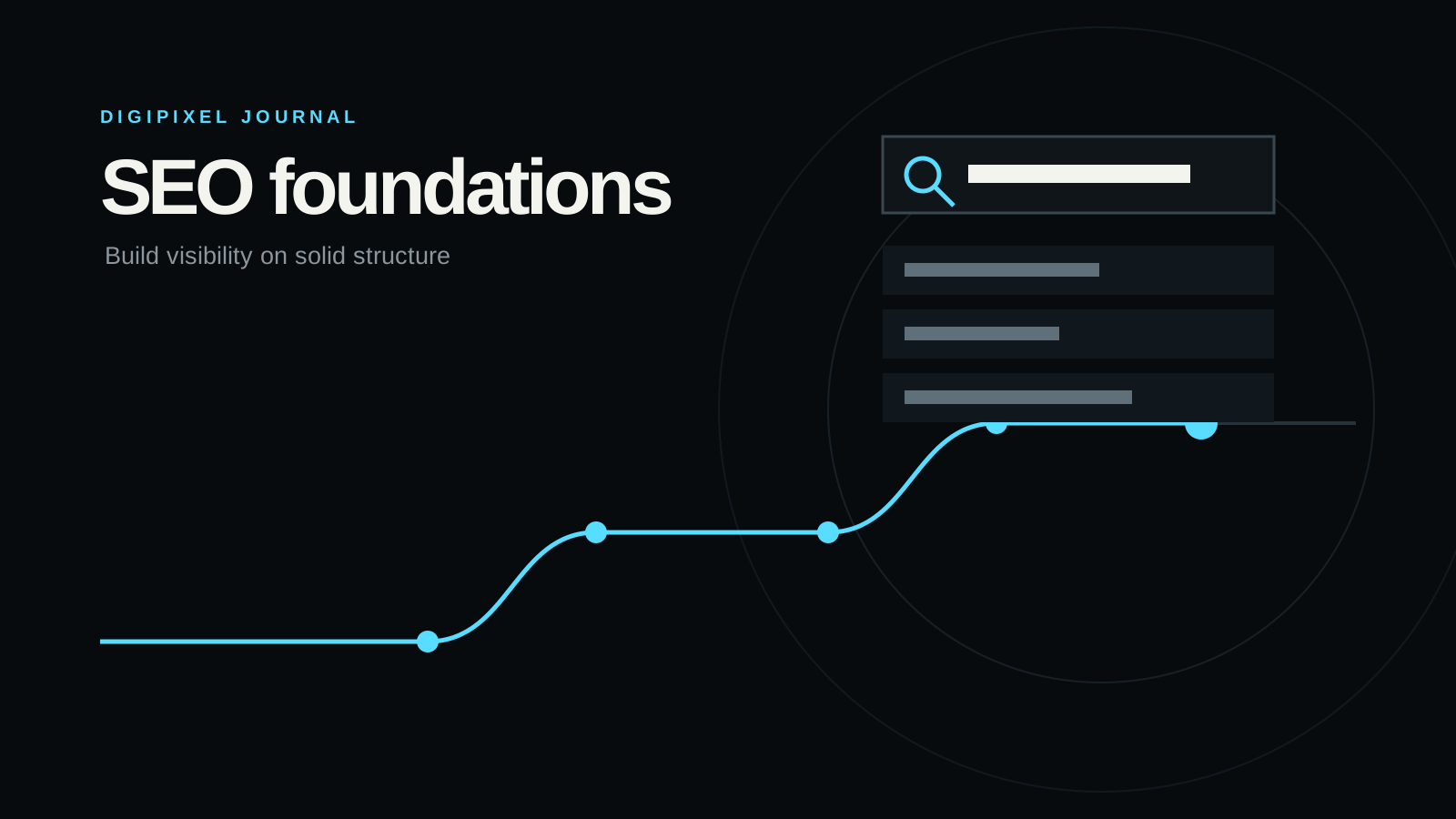
When organic traffic is disappointing, the obvious response is often “we need more content”. Sometimes that is true. Often it is premature.
A website with weak service pages, unclear site structure, indexing problems or poor internal linking can publish dozens of articles without creating a dependable route from search to enquiry.
Start with the searches connected to commercial intent
Keyword volume is useful context, but it is not the same as business value. A smaller number of people searching for a specific service, problem or location can be more valuable than a high-volume informational phrase with no clear relationship to what you sell.
Map searches to the real stages of the customer journey: discovery, comparison, reassurance and action. Your core pages should usually cover the strongest commercial intent before the editorial calendar expands.
Make sure search engines can understand the site
Technical SEO does not need to become mysterious. At a practical level, the important questions are straightforward.
- Can the important pages be crawled and indexed?
- Does each important page have a clear purpose and canonical URL?
- Are duplicate or thin pages creating unnecessary noise?
- Does the site load quickly enough on real mobile connections?
- Are redirects, errors and broken links under control?
- Does the internal structure show which pages matter most?
Fixing those foundations gives later content a better chance of being discovered and understood.
Build strong service and landing pages first
A useful service page should answer the questions that sit between a search and a decision. That usually includes what the service is, who it is for, the problem it solves, what is involved, evidence or reassurance and a clear next step.
Thin pages that repeat the same generic sales copy with a different heading are rarely a strong foundation. Each page needs a distinct reason to exist.
Use content to support the service journey
Once the commercial pages are sound, editorial content becomes much more powerful. Articles can answer earlier-stage questions, explain decisions, compare approaches and create internal links into the service pages that should ultimately convert interest.
A simple content test
Before writing an article, ask three things: what genuine question does it answer, which audience is asking it, and what should the reader reasonably do next?
If those answers are vague, the topic may be interesting but not strategically useful.
Local SEO needs consistency, not just location pages
For businesses serving defined geographic areas, local visibility depends on more than creating a page for every town. Business information, Google Business Profile data, reviews, service relevance, location signals and the real strength of the site all contribute.
Create location content where there is a genuine difference, presence or useful reason for the page. Avoid producing dozens of near-identical pages purely to insert place names.
Measure leads and useful actions, not rankings alone
Rankings are diagnostic data. They help show whether visibility is improving, but they are not the commercial outcome.
Track organic enquiries, calls, bookings, ecommerce revenue and the quality of the leads that follow. A lower-volume page that generates the right conversations can be far more valuable than a highly visible article that attracts the wrong audience.
SEO is a system, not a publishing target
The strongest small-business SEO programmes connect technical quality, page structure, useful content, authority and measurement. Publishing more can help—but only when the rest of the route is ready to support it.
YOUR NEXT MOVE
Need to turn the idea into a practical route?
Bring DigiPixel the brief, the problem or the part that is not working. We will work out what needs to happen next before prescribing a package.
Start the conversation →